Microscopy and Precision Positioning Glossary: Terms, Definitions and Industry Guide
27.07.26
This glossary provides clear definitions of the key concepts, components, and performance metrics used in automated microscopy systems, from motorized stages and motion controllers to fluorescence imaging and nanometer-scale positioning. Whether you are specifying a new system, integrating motion technology, or optimizing an imaging workflow, these definitions offer a practical reference to the terminology that underpins modern scientific and industrial imaging applications.
Abbé error
An Abbé error is a positional error caused when the measurement axis is offset from the line of motion. For example, the motorized drives on some motorized stages are at the edge, while the measurement axis is in the center. No matter how precisely manufactured the stage is, measuring away from the source of motion means that tiny rotations due to mechanical errors get amplified into larger measurement errors.
As Ernst Abbé himself said, ‘when measuring the displacement of a specified point, it is not sufficient to have the axis of the probe parallel to the direction of motion, the axis should also be aligned with (pass through) the point.’
The formula for this is:
ε=hsinθ
Where
ε Positional error (the resulting error in measurement)
h Abbé offset (the distance between the measurement point and the point of interest)
θ Angular error (the deviation from the desired angle)
Accuracy
Accuracy refers to how closely a system’s positioning matches its target. The result can be judged by how closely a movement aligns with the position it was instructed to move to, often measured in microns or nanometers.
Autofocus
Autofocus automatically finds and sets the optimal focal plane to keep images sharp during microscopy or imaging workflows. It’s an important feature for automated imaging because it ensures consistent image quality across many samples or fields of view and compensates for uneven samples or drift over time. There are various image and hardware-based methods of autofocusing, such as Prior’s PureFocus hardware laser autofocus.
Backlash
Lost motion caused by mechanical play when reversing direction. Before the driven component starts moving again, it has to take up clearance in the system. The result is a delay or a dead zone where input motion (e.g. the rotation of a stepper motor) doesn’t result in output motion (e.g. the translation of the stage plate). Unless correctly controlled, it will affect accuracy, repeatability, and consistency in imaging.
Ballscrew
A ballscrew is a precision mechanical drive system that converts rotational motion into linear motion using a threaded shaft and recirculating ball bearings. By reducing friction between moving components, ballscrews provide high efficiency, smooth motion, and excellent positioning accuracy compared with conventional lead screws. In microscopy and automated imaging systems, ballscrew-driven stages are commonly used for applications requiring reliable long-travel movement, repeatability, and load-carrying capability, particularly in large-area scanning and industrial inspection workflows.
Bandwidth
The range of frequencies over which a system can effectively follow or respond to motion or signal changes.
In precision positioning and imaging systems, bandwidth describes how quickly and accurately a system can respond to changes in input or disturbances.
Higher bandwidth means faster response and better tracking of rapid changes.
Lower bandwidth means slower response. The result is smoother but less responsive.
Bidirectional repeatability
Bidirectional repeatability describes a positioning system's ability to return to the same target location consistently when approached from either direction. Unlike standard repeatability measurements, which may only consider movement from a single direction, bidirectional repeatability captures the influence of factors such as backlash, hysteresis, and mechanical compliance. In automated microscopy and metrology applications, strong bidirectional repeatability is essential for accurate image registration, revisit routines, and measurement consistency across repeated scanning operations.
Brightfield microscopy
Brightfield microscopy is the most conventional optical imaging technique, where a sample is illuminated with transmitted white light, and contrast is generated through absorption, scattering, or density variations within the specimen. In automated imaging systems, brightfield remains a foundational modality due to its simplicity, compatibility with standard optics, and suitability for high-throughput workflows. Precision positioning systems are critical in brightfield imaging to ensure accurate sample navigation, repeatable field acquisition, and consistent focus across large scan areas, particularly in applications such as pathology slide scanning or materials inspection.
Capacitive sensor
A capacitive sensor is a non-contact position measurement device that determines displacement by detecting changes in electrical capacitance between conductive surfaces. Capacitive sensors offer extremely high resolution, low noise, and fast response times, making them widely used in nanopositioning systems and closed-loop piezo stages. In high-resolution microscopy and metrology applications, capacitive sensors provide precise position feedback, enabling stable positioning and accurate control at sub-micron and nanometer scales.
Closed-loop control
Closed-loop control is a motion control strategy in which real-time feedback from a position sensor, typically an encoder, is used to continuously correct and stabilize the position of a stage or actuator. This feedback loop enables high accuracy, repeatability, and compensation for disturbances such as load variation, thermal drift, or mechanical imperfections. In nanopositioning and automated microscopy, closed-loop systems are essential for applications requiring sub-micron or nanometer precision, ensuring that commanded positions are reliably achieved and maintained over time.
Controller (motion controller)
A motion controller is the central component responsible for coordinating and executing movement within a positioning system. It interprets user commands or software instructions and translates them into precise motor actions, while managing speed profiles, synchronization, and feedback integration. In automated imaging workflows, the controller enables coordinated multi-axis motion, supports complex scanning patterns, and interfaces with software APIs to ensure seamless integration with imaging hardware and acquisition systems.
Crossed-roller bearings
Crossed-roller bearings are high-precision linear or rotary bearings in which cylindrical rollers are arranged orthogonally between raceways, providing uniform load distribution in multiple directions. This design offers exceptional stiffness, low friction, and minimal runout, making it well-suited to precision positioning stages. In microscopy and nanopositioning applications, crossed-roller bearings contribute to stable, smooth motion with high load capacity, supporting accurate sample translation without compromising alignment or repeatability.
Crosstalk (electronics)
In electronics and motion control systems, crosstalk is the unintended coupling of signals between adjacent circuits, cables, or system components. This interference can introduce noise, affect sensor readings, or disrupt communication between hardware devices. In automated microscopy and precision positioning systems, electronic crosstalk may impact encoder feedback, trigger signals, or control communications if not properly managed. Effective shielding, grounding, cable routing, and system design help minimize crosstalk and maintain reliable system performance.
Crosstalk (imaging)
In imaging systems, crosstalk refers to the unwanted detection of signal from one imaging channel within another channel. In fluorescence microscopy, this typically occurs when emission from one fluorophore is detected in a different fluorescence channel due to overlapping spectral characteristics or insufficient optical filtering. Crosstalk can reduce image contrast, compromise quantitative measurements, and make it difficult to distinguish between labeled structures. Minimizing crosstalk requires careful selection of fluorophores, filters, and acquisition settings, particularly in multiplexed imaging applications.
Crosstalk (motion systems)
In nanopositioning systems, crosstalk refers to unintended movement in one axis caused by commanded motion in another axis. For example, movement along the X-axis of a nanopositioning stage may induce a small displacement in the Z-axis. Axis crosstalk can reduce positioning accuracy and affect scan quality, particularly in applications requiring nanometer-scale precision. Minimizing crosstalk through careful mechanical design, calibration, and closed-loop control helps ensure accurate positioning and reliable measurement performance.
Creep (piezo actuators)
Creep is a time-dependent positioning error that occurs in open-loop piezoelectric actuators following a change in voltage. After reaching an initial target position, the actuator may continue to move gradually by a small amount before stabilizing. This phenomenon is inherent to piezoelectric materials and can affect long-duration measurements or imaging tasks that require highly stable positioning. In nanopositioning systems, creep is often minimized through closed-loop feedback control, which continuously monitors and corrects the actuator position to maintain accuracy over time.
Darkfield microscopy
Darkfield microscopy is an optical imaging technique that enhances contrast by illuminating a sample with light that does not directly enter the objective lens. Only light scattered by structures within the specimen is collected, causing the sample to appear bright against a dark background. This approach is particularly useful for visualizing transparent or low-contrast specimens that may be difficult to observe using brightfield microscopy. Automated darkfield imaging systems rely on precise stage positioning and focus control to maintain image consistency across large scan areas.
Diascopic illumination
Diascopic illumination, also known as transmitted illumination, involves directing light through a sample from below or behind the specimen before it enters the objective lens. This illumination method is commonly used in brightfield microscopy and other transmitted-light techniques where internal sample features are of interest. In automated imaging systems, consistent diascopic illumination is important for achieving uniform image quality and reliable quantitative analysis across multiple fields of view.
Drift
Drift refers to the gradual, unintended movement of a positioning system over time, typically caused by thermal expansion, mechanical relaxation, or environmental factors. In high-resolution imaging and nanopositioning, even nanometer-scale drift can degrade image quality or introduce measurement errors. Minimizing drift requires a combination of stable mechanical design, temperature control, and, where necessary, closed-loop feedback systems to actively compensate for positional deviation during extended imaging or measurement sequences.
Encoder
An encoder is a sensor used to measure position, velocity, or displacement within a motion system. Encoders can be optical, magnetic, or capacitive, and provide high-resolution feedback to the motion controller. In precision positioning and automated microscopy, encoders enable accurate stage positioning, support closed-loop control, and ensure repeatability across scanning routines. High-resolution encoders are particularly critical in nanopositioning applications, where precise feedback at nanometer scales is required.
Episcopic illumination
Episcopic illumination, often referred to as reflected-light illumination, directs light onto a sample from the same side as the objective lens. The light reflected from the sample surface is collected through the objective to form an image. This technique is widely used in materials science, semiconductor inspection, and industrial microscopy, where surface features, coatings, and defects are the primary focus of analysis. Accurate positioning and focus control help ensure repeatable image capture during automated inspection workflows.
Field of view (FOV)
The field of view (FOV) defines the observable area of a sample visible through the optical system at a given magnification. In automated imaging, FOV directly influences scanning strategies, throughput, and image stitching requirements. Precision positioning systems must accurately move the sample between adjacent fields of view during tile scanning, ensuring sufficient overlap and alignment to support seamless image reconstruction across large areas.
Filter cube
A filter cube is an optical module used in fluorescence microscopy that houses excitation filters, emission filters, and a dichroic mirror. It selectively directs specific wavelengths of light to and from the sample, enabling the detection of fluorescent signals. In automated imaging systems, filter cubes are often integrated into motorized turrets to allow rapid switching between fluorescence channels. Precise mechanical positioning ensures repeatable alignment and consistent optical performance during multi-channel imaging.
Flatness
Flatness refers to the deviation of a surface from an ideal plane, typically specified over the travel range of a stage. In precision positioning systems, flatness is critical for maintaining consistent focus and alignment across the sample. Poor flatness can introduce Z-axis variation during scanning, leading to defocus or measurement errors. High-quality stages are engineered to minimize flatness deviations, supporting reliable imaging and metrology across wide scan areas.
Flatness is often evaluated alongside other performance characteristics such as repeatability, straightness, and axis crosstalk which together influence overall positioning accuracy.
Fluorescence microscopy
Fluorescence microscopy is an imaging technique that uses fluorescent labels to visualize specific structures or molecules within a sample. By exciting fluorophores at defined wavelengths and detecting emitted light, it provides high contrast and specificity. In automated imaging workflows, fluorescence microscopy often involves multi-channel acquisition, Z-stacking, and large-area scanning. Precision positioning systems enable accurate stage movement, channel alignment, and repeatable focus control, which are essential for quantitative fluorescence analysis.
Focus drive (Z drive)
A focus drive, or Z drive, controls vertical movement of the objective lens or sample, enabling precise focus adjustment. In automated microscopy systems, motorized or piezo-driven Z drives allow rapid, repeatable focusing and support advanced techniques such as Z-stacking and autofocus. High-resolution and stable Z-axis control is particularly important in high-magnification imaging and nanopositioning applications, where depth of field is extremely limited.
Filter turret
A filter turret is a rotating mechanism that holds multiple filter cubes or optical filter assemblies, allowing users to switch quickly between imaging modes or fluorescence channels. Unlike a filter wheel, which typically changes individual filters, a filter turret often exchanges complete optical filter sets. In automated microscopy systems, motorized filter turrets support high-throughput, multi-channel imaging by enabling rapid and repeatable optical configuration changes under software control.
Filter wheel
A filter wheel is a motorized or manual device that holds multiple optical filters and allows rapid selection of different wavelengths during imaging. In fluorescence microscopy, filter wheels enable automated switching between excitation or emission filters for multi-channel imaging applications. Integrated with motion control and acquisition software, filter wheels support efficient imaging workflows while maintaining consistent optical alignment and repeatability between channels.
Hardware autofocus
Hardware autofocus, often implemented using laser-based technology, is an automated focusing method that continuously measures and maintains the distance between the microscope and the sample. Unlike image-based autofocus routines that rely on software analysis of image content, hardware autofocus operates independently of sample contrast and can provide real-time focus correction during scanning. In automated imaging and whole-slide scanning applications, laser autofocus systems help maintain sharp focus across uneven samples while improving throughput and acquisition reliability.
Hysteresis
Hysteresis is a phenomenon where the position of a mechanical system depends on its movement history, resulting in different positions when approached from different directions. It is commonly observed in open-loop systems and certain actuator types, such as piezoelectric devices without feedback. In precision positioning, hysteresis can reduce accuracy and repeatability. Closed-loop control systems and careful mechanical design are used to minimize its impact, ensuring consistent positioning performance.
Image stitching
Image stitching is the process of combining multiple overlapping images into a single, seamless composite image. This technique is widely used in automated microscopy to create high-resolution representations of samples that exceed the field of view of the objective lens. Successful image stitching depends on accurate stage positioning, sufficient overlap between adjacent images, and robust software algorithms that align and blend image data. It is a key component of whole-slide imaging, large-area inspection, and digital pathology workflows.
Intelligent scanning technology (IST)
Intelligent Scanning Technology (IST) is an advanced approach to automated sample scanning which is patented by Prior Scientific. It dynamically optimizes motion paths, acquisition timing, and data capture of motorized XY stages. By coordinating stage movement with imaging processes, IST minimizes unnecessary motion, reduces scan time, and improves overall system throughput. In high-content screening and large-area imaging, this approach enhances efficiency while maintaining positional accuracy and image quality.
Laser autofocus
See Hardware Autofocus
Lead screw
A lead screw is a mechanical drive mechanism that converts rotary motion into linear movement through the interaction of a threaded shaft and mating nut. Compared with ballscrews, lead screws typically offer lower cost and simpler construction but generate higher friction and lower efficiency. Lead screw-driven stages are commonly used in microscopy automation where moderate speeds and positioning precision are required. Their simplicity and reliability make them suitable for many routine imaging and laboratory applications.
Linear motor
A linear motor is a direct-drive actuator that produces motion along a straight path without the need for mechanical transmission components such as lead screws or belts. This design enables high speed, smooth motion, and minimal backlash. In precision positioning systems, linear motors are widely used for high-throughput scanning applications, where fast acceleration and precise positioning are required without compromising stability.
Linear stage
A linear stage is a mechanical platform designed to provide controlled motion along a single axis, typically driven by a motorized system such as a lead screw, belt, or linear motor. In precision positioning and automated imaging, linear stages are used to translate samples or optical components with high accuracy and stability. Their performance is defined by parameters such as travel range, resolution, repeatability, and load capacity, making them a foundational element in microscopy and metrology systems.
Load capacity
Load capacity refers to the maximum weight or force that a positioning system or stage can support while maintaining specified performance characteristics. This includes static load (stationary) and dynamic load (during motion). In microscopy and automated imaging applications, appropriate load capacity ensures stable motion, prevents mechanical deformation, and maintains positioning accuracy, particularly when supporting heavy samples, multi-component fixtures, or additional optical hardware.
Metrology
Metrology is the science of measurement, encompassing the techniques and tools used to quantify physical dimensions, positions, and tolerances. In precision positioning systems, metrology underpins the verification of motion accuracy, repeatability, and system performance. High-precision metrology is critical in applications such as semiconductor inspection, materials analysis, and advanced microscopy, where reliable, traceable measurements at micron or nanometer scales are required.
Microscopy techniques
Microscopy techniques are a range of imaging methods used to observe samples at magnified scales, including brightfield, fluorescence, phase-contrast, and confocal imaging. Each technique imposes specific requirements on illumination, optics, and sample positioning. In automated imaging systems, precision stages and nanopositioning devices enable consistent implementation of these techniques, supporting repeatable acquisition, multi-modal imaging, and integration into high-throughput workflows.
Motorized stage
A motorized stage is a platform, such as a microscope stage, equipped with integrated motors and control electronics to enable automated movement in one or more axes. These stages are essential for applications requiring precise sample positioning, such as tile scanning, autofocus routines, and multi-position imaging. By interfacing with motion controllers and software, motorized stages support reproducible workflows, reduce manual intervention, and improve throughput in research and industrial environments.
Multiplexing
Multiplexing in imaging systems refers to the ability to capture or process multiple signals, channels, or regions either simultaneously or in rapid sequence. In fluorescence microscopy, this often involves imaging multiple fluorophores using different filter sets or illumination conditions. Precision positioning systems support multiplexing by ensuring accurate channel alignment and repeatable positioning across acquisition cycles, which is critical for comparative and quantitative analysis.
Nanometer (nm)
A nanometer (nm) is a unit of length equal to one billionth of a meter (10⁻⁹ m). In nanopositioning and high-resolution imaging, movements and measurements are often specified in nanometers to reflect the extremely fine scale of control required. Achieving reliable positioning at this scale demands advanced actuation technologies, high-resolution feedback systems, and mechanically stable designs to minimize noise, drift, and vibration.
Objective lens
An objective lens is the primary optical component in a microscope responsible for collecting light from the sample and forming a magnified image. Its characteristics, including magnification, numerical aperture, and working distance, directly influence resolution, depth of field, and field of view. In automated imaging systems, precise positioning of the objective relative to the sample is critical, with Z drives and stable stages ensuring consistent focus and optical performance.
OEM (original equipment manufacturer)
An OEM is a company that produces components or subsystems that are integrated into another manufacturer’s final product. In the context of precision positioning and microscopy, OEM solutions often involve customized stages, controllers, or motion subsystems designed to meet specific application requirements. Collaboration with OEM partners enables seamless system integration, optimized performance, and scalability for specialized imaging or measurement platforms.
Open-loop control
Open-loop control is a motion strategy in which the system operates without feedback from position sensors, relying instead on predefined input commands to determine movement. While simpler and often lower cost than closed-loop systems, open-loop control does not compensate for errors such as load variation, missed steps, or drift. In precision positioning, open-loop systems are typically used where high accuracy is not critical or where system behavior is highly predictable.
Piezoelectric actuator
A piezoelectric actuator is a device that produces precise mechanical displacement in response to an applied electrical voltage, based on the piezoelectric effect. These actuators offer extremely high resolution and fast response times, making them ideal for nanopositioning applications such as fine focus control, scanning probe microscopy, and high-resolution imaging. When combined with closed-loop feedback, piezo systems can deliver stable, repeatable positioning at nanometer scales.
Pitch
Pitch refers to rotational movement around the lateral (typically X) axis of a stage or positioning system. In precision motion applications, pitch errors can result in unwanted angular displacement, affecting focus and alignment during scanning. Minimizing pitch is essential in microscopy systems, particularly when imaging across large areas or at high magnification, where even small angular deviations can degrade image quality.
Repeatability
Repeatability is the ability of a positioning system to return to the same location consistently under identical conditions. It is a key performance metric in automated imaging and metrology, as it determines the reliability of repeated measurements or acquisitions. High repeatability ensures that features of interest can be revisited accurately, supporting longitudinal studies, multi-pass imaging, and quality control processes.
Resolution
Resolution in positioning systems refers to the smallest incremental movement that can be commanded or detected. It is distinct from accuracy and defines the level of detail at which motion can be controlled. In nanopositioning and microscopy, high resolution is essential for fine adjustments, precise scanning, and accurate alignment, particularly when working at sub-micron or nanometer scales.
Roll
Roll is the rotational movement of a stage or positioning system around its longitudinal (typically Y) axis. Unwanted roll can cause the sample plane to tilt relative to the optical axis, potentially affecting focus consistency and image alignment across the field of view. In precision microscopy and metrology systems, mechanical design and bearing selection are carefully optimized to minimize roll errors and maintain stable positioning throughout the stage's travel range.
Sample holder
A sample holder is a fixture or mounting system used to secure a specimen during imaging or measurement. It ensures that the sample remains stable and correctly oriented relative to the optical system. In automated workflows, sample holders are often designed for repeatability and compatibility with motorized stages, enabling rapid exchange, consistent positioning, and integration with high-throughput processes.
Servo motor
A servo motor is a motor system that incorporates feedback control, typically using an encoder, to achieve precise position, speed, or torque regulation. In precision positioning systems, servo motors are commonly used in closed-loop configurations to deliver smooth, accurate motion with high dynamic performance. They are well suited to applications requiring continuous motion, high speeds, and accurate trajectory control.
Software API
A software API (Application Programming Interface) provides a defined set of commands and protocols that allow external software to interact with, and control, hardware systems. In automated imaging and precision positioning, APIs enable integration between motion controllers, microscopes, and image acquisition software. This allows users to develop customized workflows, automate complex tasks, and synchronize motion with data capture.
Stage (microscope stage)
A microscope stage is the platform that supports and positions the sample relative to the objective lens. It may be manual or motorized, with multi-axis (X, Y, Z, or rotational) movement to enable precise navigation across the sample. In automated imaging systems, motorized stages are essential for scanning, positioning, and repeatable workflows, providing the mechanical foundation for accurate and efficient data acquisition.
Step rate
Step rate refers to the frequency at which a stepper motor receives input pulses, determining the speed of movement. Higher step rates correspond to faster motion but must be balanced against system dynamics to avoid missed steps or instability. In precision positioning systems, step rate is carefully controlled to achieve smooth, accurate motion profiles during scanning and positioning.
Stepper motor
A stepper motor is an electromechanical device that moves in discrete steps in response to digital input pulses. This allows precise control of position without feedback in open-loop configurations. Stepper motors are commonly used in positioning systems where cost-effective, repeatable motion is required. However, their performance may be limited compared to closed-loop systems in demanding high-precision or high-speed applications.
System integration
System integration refers to the process of combining multiple hardware and software components into a unified, functional system. In precision positioning and automated imaging, this involves coordinating stages, controllers, optics, cameras, and software platforms. Effective integration ensures that motion control, data acquisition, and image processing operate synchronously, enabling reliable workflows, optimized performance, and scalability for OEM and end-user applications.
Thermal stability
Thermal stability describes a system’s ability to maintain consistent performance despite temperature variations. Changes in temperature can cause mechanical components to expand or contract, leading to positional drift or alignment errors. In high-precision microscopy and nanopositioning, materials selection, mechanical design, and environmental control are critical to minimizing thermal effects and ensuring stable, repeatable measurements over time.
Throughput
Throughput refers to the rate at which samples or data can be processed within a given period. In automated imaging systems, throughput is influenced by factors such as stage speed, acceleration, settling time, and data acquisition efficiency. Optimizing throughput requires balancing motion performance and imaging quality, ensuring that faster scanning does not compromise positioning accuracy or image fidelity.
Tile scanning
Tile scanning is a technique used to image large sample areas by capturing multiple adjacent fields of view and stitching them together into a single composite image. This requires precise stage movement to ensure consistent overlap and alignment between tiles. In automated microscopy, accurate positioning and repeatability are essential for seamless image reconstruction, particularly in high-resolution or high-content imaging applications.
Transistor-transistor logic (TTL)
Transistor-Transistor Logic (TTL) is a widely used digital signaling standard that enables electronic devices to exchange simple, high-speed control signals. In microscopy and automated imaging systems, TTL signals are commonly used to synchronize hardware components such as cameras, illumination sources, stages, shutters, and lasers. By triggering events with precise timing, TTL communication helps coordinate image acquisition and motion control, improving workflow efficiency, and ensuring repeatable experimental results.
Travel range
Travel range defines the maximum distance a stage or positioning system can move along a given axis. It is a key specification in determining the usable scan area and the size of samples that can be accommodated. In microscopy and metrology applications, selecting an appropriate travel range ensures that the system can cover the entire area of interest while maintaining the required accuracy and stability.
Vibration isolation
Vibration isolation involves reducing or eliminating external mechanical vibrations that can affect positioning accuracy and image quality. Sources of vibration may include building infrastructure, nearby equipment, or environmental disturbances. In nanopositioning and high-resolution imaging, isolation systems such as damped platforms or active control mechanisms are used to maintain stability and ensure precise, noise-free measurements.
Workflow automation
Workflow automation refers to the use of software and integrated hardware control to execute repetitive or complex tasks without manual intervention. In automated imaging systems, this includes stage movement, focus adjustment, image acquisition, and data handling. By automating workflows, users improve consistency, reduce operator error, and significantly increase throughput in research, clinical, and industrial applications.
Yaw
Yaw is the rotational movement of a stage or positioning system around the vertical axis. Uncontrolled yaw can introduce alignment errors during lateral movement, affecting image registration and measurement accuracy. Precision XY stages are designed to minimize yaw through rigid mechanical construction and high-quality bearings, ensuring stable and accurate motion across the full travel range.
More Blogs
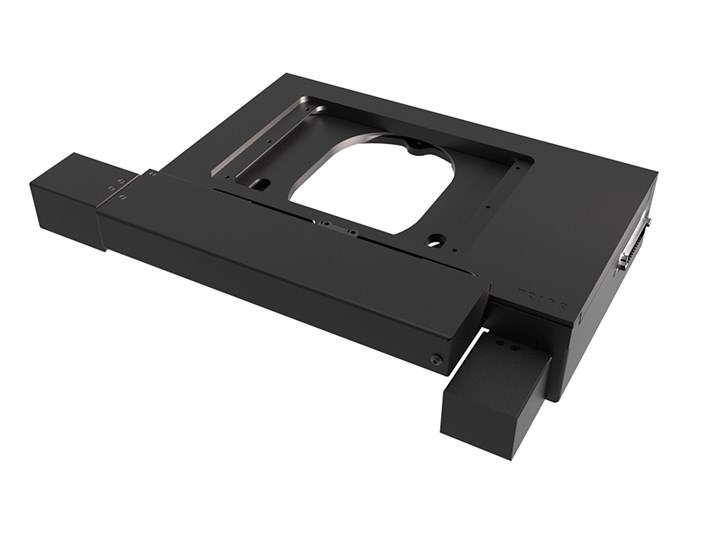
H100A Compact Motorized XY Microscope Stage for Precision Microscopy: Product Manager Q&A
Learn More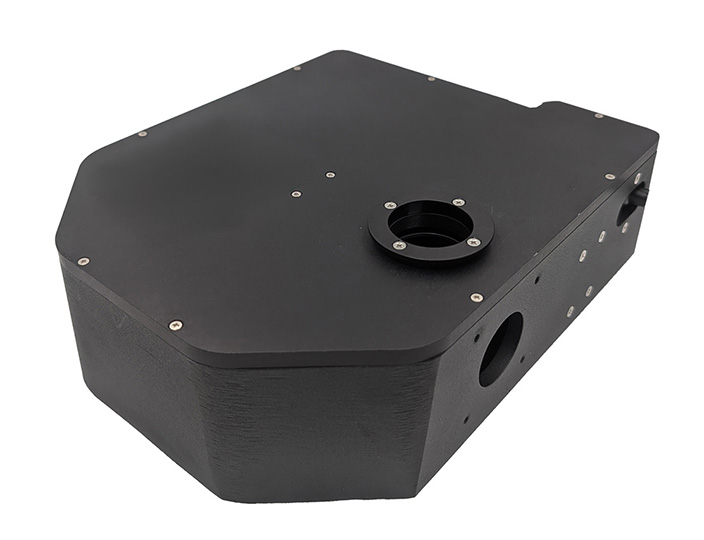
How a motorized filter cube turret expands microscope performance across advanced imaging workflows
Learn More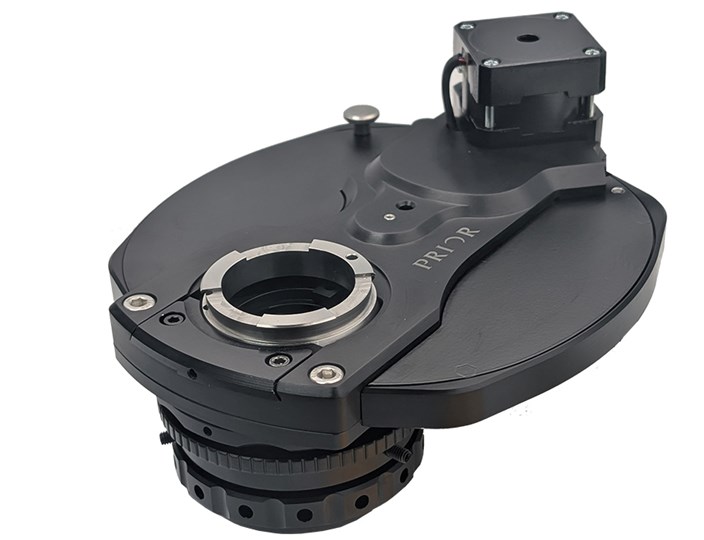
HF108B Filter Wheel: High‑Speed Fluorescence Imaging for Automated Microscopy Systems
Learn More